
History
Celebrating 30 Years of Music Industry Evolution
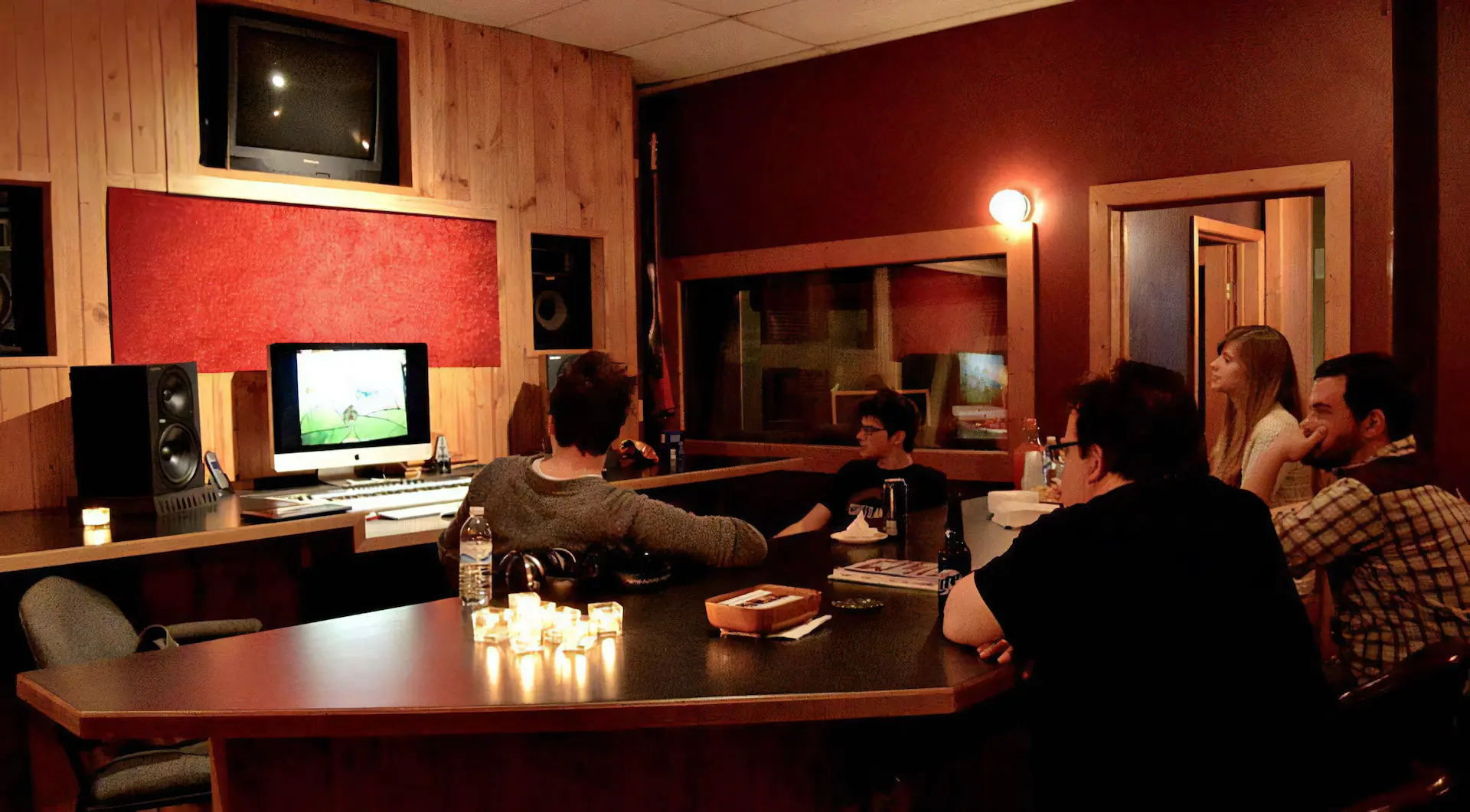
Table of Contents
Red Line Recording | 1996–1997
The Analog Foundations
DreamSTATE Productions | 1997–1999
Professional Studio & Live Sound Expansion
DreamSTATE South | 1999–2002
Hybrid Digital Era & Regional Presence
DreamSTATE Studios | 2002–2009
Professional Studio Era & Regional Recognition
DreamSTATE Records | 2004–Present
Independent Label, Distribution & Artist Network
Musica & Studio B | 2009–2011
Second Studio Location & Live Venue Development
DreamSTATE Akron | 2011–Present
Technology, Collaboration & Cloud-Based Infrastructure
Proto Digitales | 2012–Present
Music Technology & Custom Web Tools
E19 Music | 2015-2024
Infrastructure, Migration & Deliberate Separation
A Continuous Philosophy | 2026
Music, Technology & Independence
Red Line Recording | 1996–1997
The Analog Foundations
This period marks Jakob Ward’s earliest hands-on experience with recording and sound capture. Red Line Recording was a one-room, all-analog setup centered around a Sony 2-track reel-to-reel and vintage dynamic microphones. The environment emphasized fundamentals—mic placement, performance, and signal flow—forming a practical and intuitive introduction to recording without automation or digital correction.
This era established a discipline-first approach that would carry forward into every phase of DreamSTATE’s evolution.
DreamSTATE Productions | 1997–1999
Professional Studio & Live Sound Expansion
DreamSTATE Productions emerged during Jakob’s time working out of a Cleveland-based professional recording studio owned by Billy Morris (Warrant, Kidd Wicked). This period marked the transition from personal experimentation to client-focused production work.
The studio environment introduced multi-track recording, professional monitoring, console-based mixing, and early digital editing and mastering workflows.
During this same period, Jakob became the primary live sound engineer at The Flying Machine in Lorain, Ohio. In parallel, he operated a remote live sound business throughout Ohio, providing mobile P.A. systems for county and city fairs for Billy. This work involved full responsibility for logistics, setup, live mixing, client coordination, payment handling, and teardown—building real-world production, reliability, and business experience.
DreamSTATE South | 1999–2002
Hybrid Digital Era & Regional Presence
DreamSTATE South represents a significant technical and creative expansion. This era introduced multi-machine ADAT recording, delivering 24-track digital capture through three synchronized Alesis ADAT machines, alongside early Pro Tools integration via the Digidesign 001 interface. A growing outboard and microphone collection—including PreSonus Digimax preamps, the Joe Meek VC-1, and Audio-Technica microphones—bridged analog sensibilities with emerging digital workflows, marking a decisive transition into hybrid production.
This period also solidified Jakob’s regional live sound presence, with ongoing sound engineering work at venues including Brady’s Cafe, The Avenue, and Annabell’s. The balance between studio production and live sound reinforced an adaptable, performance-aware production philosophy—grounded in musicianship, reliability, and real-world acoustics.
DreamSTATE Studios | 2002–2009
Professional Studio Era & Regional Recognition
This period represents the full realization of DreamSTATE as a professional recording studio and production company. Located in downtown Akron, DreamSTATE Studios operated out of a purpose-built space exceeding 2,000 square feet, designed to support artists, bands, and media clients in a comfortable, creative environment.
DreamSTATE became known for combining technical capability with a relaxed, artist-first atmosphere—earning a reputation for quality, efficiency, and accessibility across Northeast Ohio.
Studio Services & Capabilities
DreamSTATE Studios offered comprehensive recording, mixing, editing, music production, and post-production services. The studio embraced modern Pro Tools–based workflows while maintaining an ear trained in analog discipline and performance realism.
Editing became a defining strength during this era, with a reputation for speed and precision that set the studio apart regionally. Advanced Pro Tools techniques were used extensively to deliver polished, professional results without sacrificing musical integrity.
Post-production services expanded the studio’s reach beyond music, incorporating ADR, Foley, and sound design for film, television, and broadcast media.
Clients & Industry Reach
During this period, Jakob Ward worked with a wide range of artists, bands, record labels, and corporate media clients—spanning independent music through nationally recognized acts and broadcast networks.
Clients included artists affiliated with major labels, established touring acts, regional and national recording artists, as well as media organizations such as The History Channel, The Discovery Channel, and BET. This era firmly positioned DreamSTATE as a trusted production resource across multiple industries.
Team & Leadership
Jakob Ward
Owner · Engineer · Producer
Regional Director, Undercurrents International Showcase
Jakob served as the creative and technical lead of DreamSTATE Studios, balancing engineering, production, artist development, and studio operations. Widely regarded as a cornerstone of the Akron music scene, he became known for versatility, reliability, and an ability to bridge artistic vision with technical execution.
Sean Larson
Certified Audio Engineer · Producer
Sean Larson brought formal training in audio engineering and post-production for film, with a specialization in sound design, ADR, and Foley. His work contributed to both music and broadcast projects.
John Rader
Producer · Songwriter · Independent A&R
With over a decade as an A&R executive at Arista Records, John provided industry insight, artist development perspective, and strategic guidance during this phase of DreamSTATE’s evolution.
A Defining Chapter
From 2002 to 2009, DreamSTATE Studios matured from a regional studio into a recognized production hub—serving artists at every level while maintaining a grounded, musician-focused ethos. This era laid the professional, technical, and reputational foundation that would support DreamSTATE’s next phases of evolution.
DreamSTATE Records | 2004–Present
Independent Label, Distribution & Artist Network
DreamSTATE Records is an independent music label founded in Akron, Ohio, created to support quality-driven artists through modern distribution, licensing, and targeted promotion.
Built alongside DreamSTATE Studios, the label grew into a long-running catalog and artist network. Over time, DreamSTATE Records developed an online catalog exceeding 500 songs, with a roster that at one point included up to 78 active artists. This scale allowed the label to function not only as a release platform, but as an operational ecosystem for independent musicians.
Distribution, Licensing & Marketing Infrastructure
A defining element of DreamSTATE Records has been its early adoption of digital distribution and data-driven marketing. By maintaining one of the largest internally managed databases of current music industry listings, the label was able to design and execute highly targeted, automated marketing and outreach campaigns.
The primary function of the label has been to assist artists with:
- Worldwide online music distribution
- Licensing and placement opportunities for film, television, commercials, and branded media
- Catalog organization and rights management
Many DreamSTATE artists actively toured, maintaining consistent routes throughout the Midwest and the Eastern United States, reinforcing the label’s emphasis on working musicians and real-world audience development.
Artists & Releases
DreamSTATE Records has released and supported a diverse range of artists and projects across genres, including:
Featured Artists
- 20GOTO10
- Laddie Fair Jr
- Jakob Ward
- Starlazer
- The Kickliner ( London, UK )
- Vince Tyree
In addition to individual releases, the label has hosted annual compilation projects to reflect evolving creative trends and to showcase the breadth of its artist community. These compilations became a recognizable part of the DreamSTATE identity.
Industry Recognition & Partnerships
Artists affiliated with DreamSTATE Records have received recognition and placements connected to major organizations including Sony Records, Audio-Technica, SIT Strings, FOX Television, The History Channel, The Discovery Channel, and BET, among others.
The label achieved several key operational milestones:
- Signed as a Worldwide Content Provider with Apple iTunes
- Established as a GS1 Partner
- Granted ISRC Authority by the RIAA
These credentials positioned DreamSTATE Records as a fully independent yet industry-compliant label, capable of managing releases and rights at scale.
DreamSTATE Label Group
As the catalog and artist network expanded, DreamSTATE evolved into a broader label group structure:
- DreamSTATE Records
- Firescape Records ( Atlanta, Georgia )
- Sword In Skull Records ( 20GOTO10 )
This structure allowed creative focus, genre separation, and flexible release strategies while remaining under a unified operational philosophy.
Ongoing Legacy
Since 2004, DreamSTATE Records has remained active through continuous catalog growth, evolving distribution models, and long-term artist relationships. The label stands as a reflection of nearly three decades of adaptation within the changing music industry—grounded in independence, technical understanding, and artist-centered development.
Musica & Studio B | 2009–2011
Second Studio Location & Live Venue Development
Studio B marked DreamSTATE’s second dedicated recording studio, opened on High Street in downtown Akron. This location reflected a continued focus on high-quality signal chains and refined production workflows, serving as a compact but professional environment for recording and production during a transitional period for the industry.
Featured equipment at Studio B included the Avalon VT-737, Focusrite ISA-428, and Manley Variable MU Limiter, reinforcing DreamSTATE’s continued emphasis on tone, dynamics, and front-end quality.
In parallel, DreamSTATE played a key role in the development of Musica, a downtown Akron live music venue. This involvement extended beyond recording into venue creation—contributing to stage layout design, live sound planning, artist booking, and the acquisition of professional endorsements and microphones from Audio-Technica.
Musica became an important hub for live performance in Akron and remains an active venue today, representing a lasting contribution to the local music ecosystem.
DreamSTATE Akron | 2011–Present
Technology, Collaboration & Cloud-Based Infrastructure
Beginning in 2011, DreamSTATE Akron entered a new phase—shifting from a primarily physical studio and label model toward a technology-enabled, cloud-ready operation. This evolution brought together recording, label services, and custom-built tools under a single collaborative framework.
DreamSTATE Akron functions as a convergence point for talent across Northeast Ohio, supporting innovation in recording studio services, independent label operations, and music-focused technology. Physical creative spaces continued through rehearsal environments and house shows, while core operations increasingly moved into digital systems.
Proto Digitales | 2012–Present
Music Technology & Custom Web Tools
As the music industry became more data-driven and decentralized, DreamSTATE shifted focus toward building custom web applications designed specifically for independent artists and labels.
Building on its relationship with Apple, DreamSTATE developed a private portal for managing iTunes financial reports, user access, internal messaging, and distribution-related resources—reducing friction between artists, releases, and revenue data.
This period marked the transition from service provider to platform builder.
Primary Applications
- Studio Portal - Centralized content management system designed to automate studio bookings, client management, and invoicing.
- Music Cube - An online discovery and filtering tool allowing music and audio to be categorized by genre, instrumentation, and mood—optimized for licensing and placement workflows.
- Studio Host - Cloud-based storage utility for audio files and music masters, designed for long-term access, security, and distribution readiness.
- Tour Planner - Organizational tool for planning tours, managing venues, contacts, press outreach, and structured itineraries.
E19 Music | 2015-2024
Infrastructure, Migration & Deliberate Separation
Between 2015 and 2024, the development of E19 Music represented a period of consolidation and technical experimentation. During this phase, DreamSTATE’s music catalog and operational workflows were migrated into the E19 technology platform, allowing recording, distribution, administration, and automation to operate within a unified system.
This “out-of-the-box” approach validated the technical foundation—proving that the tools, data models, and infrastructure could scale. At the same time, it clarified an important distinction: while technology benefits from abstraction, music benefits from identity.
As a result, DreamSTATE Akron was reaffirmed as the original creative and cultural brand, rooted in place, artists, and history. In parallel, the more technical, platform-oriented label and systems work was intentionally separated into Centris Music, allowing each entity to operate with clarity and purpose.
This phase reflects not a reversal, but a refinement—preserving DreamSTATE’s artistic continuity while enabling future-facing music technology to evolve independently.
A Continuous Philosophy | 2026
Music, Technology & Independence
As DreamSTATE approaches its third decade, the philosophy behind the work has become clearer—not more complicated.
DreamSTATE was never built around a single room, format, or business model. From a one-room analog setup in the 1990s to multi-room studios, a functioning independent label, live venues, touring networks, and eventually custom-built technology platforms, the guiding philosophy has remained consistent:
Serve the music. Respect the artist. Build what’s missing.
Each phase of DreamSTATE’s evolution responded directly to the needs of the moment. When access to recording was limited, the focus was fundamentals and hands-on engineering. When artists needed professional environments, DreamSTATE built studios that were comfortable, affordable, and technically capable. When distribution and licensing became critical, the label infrastructure emerged. When data, scale, and independence became the bottlenecks, the work moved into software, automation, and cloud systems.
Rather than chasing trends, DreamSTATE adapted by staying close to the work—recording sessions, live sound, touring routes, licensing realities, and the administrative burden artists quietly carry. The shift into technology was not a departure from music, but an extension of it: solving the same problems with new tools.
Across every era, DreamSTATE has operated with a practical, artist-first mindset—favoring sustainability over hype, infrastructure over shortcuts, and long-term relationships over momentary visibility. Whether through analog tape, Pro Tools rigs, venue development, label operations, or custom web applications, the mission has remained the same:
Create systems that let artists focus on creating.
Thirty years in, DreamSTATE Akron stands not as a single entity, but as an evolving framework—where music, technology, and independence meet.